Introduction
The thought of a pre-event or pre-performance routine might not appeal to everyone; however, it can really benefit all levels of paddler in any type of event. I’m not here to convince you, but if you want a bit more out of your performance, or you’re curious to know what I’m talking about then read or listen on! Just to explain what I mean by pre-event routine, it is the way in which you organise yourself in the lead up to a race or event in the week before, day before and on the day. When I talk about pre-performance routine, I mean the way that you prepare the body and the mind for your activity, whether that is sport or a focused task. For the purposes of this piece, I will refer to Stand Up Paddleboard racing and events and my experience and findings on this topic. I will also reference a couple of books that I have found really interesting for your further reading.
Routines and habits are something to consider if you are looking for the extra gains in your sport or craft, after all it isn’t just about sport, as I mentioned above, it could be any focused task, like work, study or musical practice. You may already train or practice to your maximum time allowance in a busy schedule, you may already have your nutrition dialled in to the best of your knowledge, so where else can you find that little bit more when it comes to performance? Well, it comes in the preparation for performance, the state of the mind created before and then maintained during your focused task.
Background
I don’t have a definitive starting point on where I introduced routines to my sports, but have more developed them with time and experience and I’m still learning and experimenting now. I’m still trying to translate this to studies and work but I’m getting there with practice. Upon analysing and reflecting on my best sporting achievements both individually and as part of team, it was clear that they were the result of a good physical and mental states of mind before and during competition. I want to share more about this topic because I have really enjoyed seeing my own progress and the way I have layered each new routine and finding on top of the next. I am discovering more all the time and I am certain that my routines will develop further as I change and grow as an athlete.
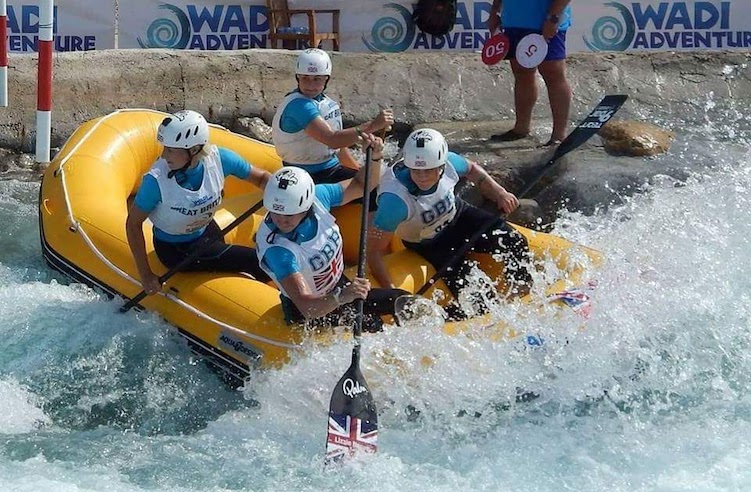
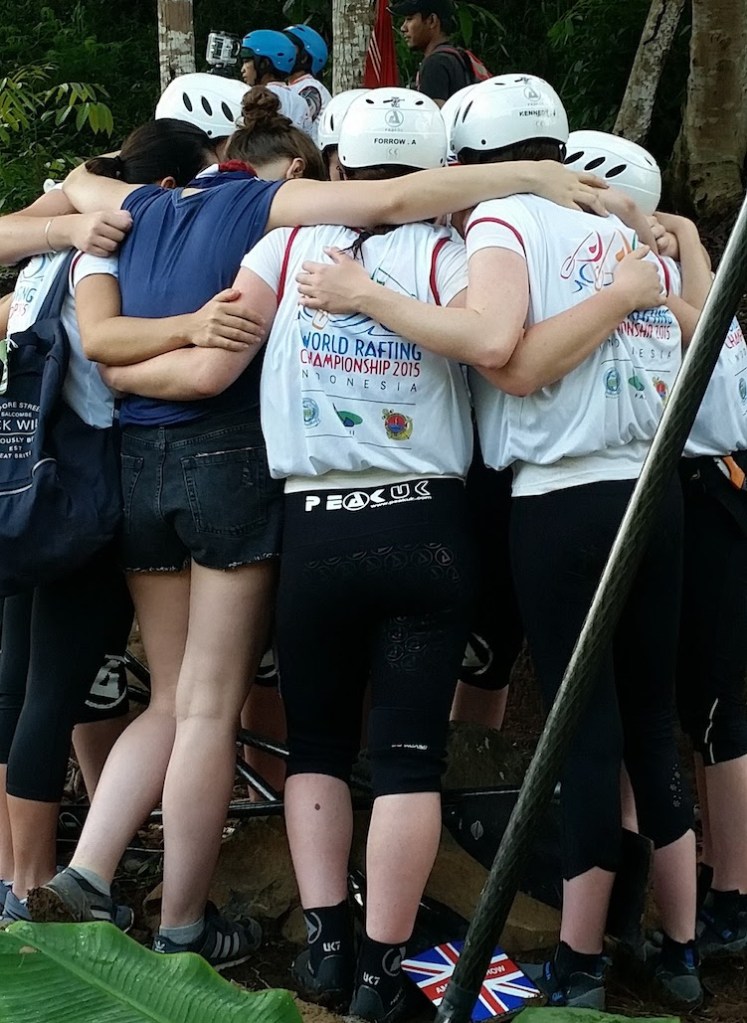
I became aware of pre-performance routines while paddling with the GB Women’s Rafting team. One of my teammates introduced us to the team warm up, this was more of a mental preparation rather than a physical one. It focused us together, got us thinking as a team and fired us up. This has a name, it is called Activity Set [quote from Coaching Science by Terry McMorris and Tudor Hale] We would start to get into the zone by taking 10 minutes for our own personal warm up, this was the physical preparation. Once we were satisfied with our physical preparation we gathered together at a pre specified time, where we gathered in a circle. In this circle we would perform a series of moves that challenged our co-ordination and teamwork, they created focus, rhythm and sharpened our minds. These are the key elements that were needed for functioning in the most productive way in a raft together. This mental preparation task focused our minds yet also contained an element of fun, many of the exercises made us chuckle as we performed them and they were became the glue that bound us together.
In the last year I have developed a similar routine for Stand Up Paddleboard racing. Since then, I have found that I have maintained much better focus for the shorter races such as the technical and sprint events. I still use the same warm up and process for the longer events too, I find that no matter what the event I know I will start with maximum physical and mental readiness. Although this was a path of relative self-discovery, I also reference a couple of books here which might be of interest. They have further detail in activity readiness and the reasons for doing so. The first of these is Coaching Science by Terry McMorris and Tudor Hale, it has various chapters which go into detail about the benefits of having a pre-performance routine and the difficulties of sports like SUP where in a day you might have multiple events where athletes have to re-warm and re-focus many times. They also go into further detail about post-performance routine, an element that I will be taking more seriously this year. This year I also delved into a fantastic book called Peak Performance by Brad Stulberg and Steve Magness, they approach the topics about how successful people maintain their performance through keeping their routines consistent. They look at business people to sports people to politicians. It is a book that I would highly recommend for inspiration to create and keep consistency in your life. One fine example they give, is my favourite author Stephen King getting himself in the zone for writing. King has cup of coffee and listens to ACDC to find his rhythm, this is his version of Activity Set. If you are a paddler or more interested in the sports psychology of paddling then you might be interested in a beautiful book called In The Flow by Jonathan Males. He writes a very interesting chapter about the difference in psychology of female and male paddlers, and highlights the benefits of women paddling together.
The Benefits of Routine
Any level of paddler can benefit from introducing routines to training and competition. It can simply make life easier on the day of your event and it can help reduce anxiety. A routine can create more certainty around timings for the day and give focus to each task in hand, so if you suffer from nerves then routines are a useful tool. Finding your personal routine to become ‘Activity Set’ will prepare the body and the mind, so whether you’re a beginner or experienced paddler it will always be beneficial. The physical readiness is always important and the mental preparation is more of a refined habit, but once the benefits are realised, you will wonder why you haven’t been doing it forever!
If you’re the type that is pretty chilled on race or event day, you might benefit from some ‘revving up’ through an excitable and active pre-performance routine, however those that are anxious may find a calmer routine, followed by focus on breathing and visualisation more effective. Those that suffer from negative self-talk may find that some moments of reflection pre-race, outlining goals, will better their performance by switching the negative to positive through focused intentions. I will give more examples on how to do this later.
For young people taking part in sport, it is a good idea for parents to help them get into the routine of warming up and taking time to focus on the event. Creating a positive experience around competition will mean young people will more likely want to take part again. This positive experience however, is really driven by parents and coaches who have the power to make this happen. If a young person is visibly nervous, or distressed, then their concerns should be validated, not simply dismissed. This does not acknowledge that is it ok, and normal to find a competition environment stressful. Instead it teaches them that what they are feeling is not a normal response. You could swap ‘Oh you’ll be alright’ to ‘I understand you must be feeling quite nervous today, lets work together to help you feel more relaxed’ – then, helping them to perform a focus task like a warm up or visualisation technique to help them prepare better and give them tools they can use again for the future. Easier said than done for adults and young people alike, but starting with these elements in training begins to build good habits and makes them easier during competition. Parents and coaches can help young people to create a routine on an event day just the same as I will outline later. As a coach or parent there is also the added responsibility to be organised yourself to make the day run smoothly.
Pre-Event Routine
Lets break it down, we will look at the week before the event, the day before and the event day itself. In an ideal world, you will have done enough training for the event that you are going to take part in. You will have the right kit, and hopefully you will have a good idea of what you need nutritionally to keep yourself sustained during training, therefore you can apply this to your event. One motto to live by is ‘nothing new on race day’
The Week Before
The week before an event is a good time to compile the kit you need. It is also a good time to test out the kit you are going to wear during and make sure everything is working, for example, do you know how to operate your hydration pack?! You may already do all these things in training, but if you use slightly different methods during an event then it’s good to have a final test before the big day. Nutritionally you might want to do a session with an electrolyte in your water, or with any snacks you’ll be carrying with you, or even test your pre-event meal before paddling. It is wise to do a training session at the same time of day that the event will be held, so you know how your body will be feeling and fuelled at that time of day. Not all these things are possible but any pre-event simulation beforehand will be really useful.
The Day Before
The day before you will probably want to check timings for the event, or even make your way there, especially if it starts early in the morning. Arriving ahead of time gives you a chance to check out the water conditions and even get out for a paddle. You will want to make sure that you fuel and hydrate well and perhaps do some light exercise or movement to help your body feel ready. Take some time to make a plan for the following day, this takes all the guess work out of event day so all you have to do it stick to your timings! My normal plan of action is to work backwards from the event start time, to the time I want to wake up. I got this planning gem from my rafting days, we were always very organised as a team and this kind of preparation made sure that everyone knew exactly where they had to be. Other things that you might want to include are; travel time, registration time, race briefing, changing, snack or breakfast and warm up. I am going to go into further detail about the warm up later as I think this is one of the most important elements of the day. Some of these things might be second nature to you if you are a seasoned competitor already, but they are really useful things to know if it is your first time. This planning technique is also great if you are travelling with a group and helps to maintain good team communication. If you are competing in multiple events during the day, for example many sprint and technical rounds, then it is wise to create a few versions of this plan to follow through out the day, as you will need to be on the ball with fuelling yourself and warming up before every event – even if the event is only a two-minute sprint! Being organised like this is more likely to help you achieve optimum performance.
On The Day
On the day you can follow your plan you set out the day before, no doubt there will still be some nerves and you might not be feeling quite like yourself. If you are travelling with friends or family, its often worth communicating with them that you might behave a little differently because you’re nervous! Once you are at the event site, if you haven’t done so already, take some time to check out the water. Have a look at the start line and the course. If you are paddling in sprint or technical races, you can start to make some tactical preparations, this is one of the most exciting elements of SUP racing! Tactics can really help your race run smoothly. For example if you have chance to get on the water before a technical race, then have a practice of paddling in different angles to the wind and swell, making turns in every direction will help you feel familiar with the conditions. You can also think tactically about the start line, where can you stand to give yourself a better advantage. Even analyse the wind, how will this affect your paddling stance or position on the line? For the rest of the day, try and keep to your plan, the plan gives focus, yet it doesn’t have to spoil your fun. There’s still many moments for laughing and having a good time with your mates, in fact having a laugh and a joke is the perfect way to help relieve some pre-race tension.
The Practical Application and Pre-Performance Routine
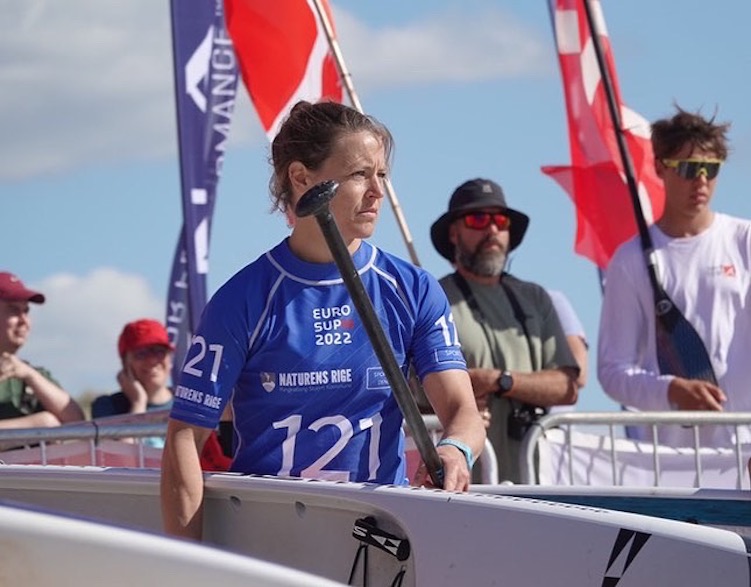
Here I’d like to outline my thought processes and preparation for the stand up paddleboard European Championships in Denmark last year. In the lead up to this event I really became aware of how much a good routine and pre-performance process can be beneficial. I also realised my enjoyment for learning about this topic and experimenting with new strategies. It also just happens to be the process that lead to one of my best paddling performances to date, winning an individual bronze medal in the sprint event. However, I was also incredibly happy with my performances through the intentions I set and executed that were not outcome based. If you set outcome based intentions then you are looking at placing and standings amongst other competitors, however if you are looking at performance based intentions then you are looking for more personal feelings and small gains, for example executing positive self-talk during the race or maintaining good technique. Even when I have been fortunate enough to win or place on the podium, I still have been fulfilling intentions that are performance based rather than outcome based. Doing so means that there is always more to paddling and the feeling it gives rather than the feeling that success gives.
On the lead up to Denmark I didn’t always get the chance to train how I wanted. Sometimes I was only training up to 30 minutes a day due to work. I was doing what I could and that included eating well and structuring my training to include everything I needed, even if trainings were shorter than I wanted. I was also working on staying grateful and grounded in my day to day life. I took this thought process to Denmark with me and it allowed me to fully immerse myself in the moment and be entirely proud and present.
I had started to include warm up routines into my training schedule at home and started to experiment with the feeling and mindset that I wanted to create during racing. I thought long and hard about what it was that I needed to get me to that focused point. I ended up calling upon previous experiences in meditation and mindfulness to create complete presence around the activity I was about to undertake. This meant that I started training fully focused, leaving behind anything else on my mind so I could focus on the physical task in hand. Part of this routine was also thinking about the feeling I wanted to accomplish during training. Then all I had to do was go and carry out the training and create that feeling. This is definitely easier said than done, especially if time is of the essence or there is a lot going on in your life. But I believe if you can take the time to practice gratitude and mindfulness around paddling at any level and any discipline, you will always be happy with your time on the water. These moments leading up to and including my time in Denmark have shaped the way in which I see how performance can be optimised.
The Physical Warm-Up
During a physical warm-up I either listen to some music, or I just listen to the sounds of the beach around me. I start by taking a short jog to raise my heart rate, often somewhere quiet, just out the way of the event so I can have some time to myself. After the heart raiser, I start perform some dynamic movements that warm the whole body. I do some lunges, twists, jumps, any full body movement. Dynamic movements are important because they prepare the body for exercise much better by replicating the movement that will be performed in the main session. Static stretching is much better for after exercise to relieve the tension in the muscles and help them retain their flexibility. During the warm up I move my entire body, this is because stand up paddle boarding is a full body sport, we engage every muscle from our toes right up to our neck and shoulders. To create your own warm up, you might want to work methodically from the feet upwards, or from the neck down. Once this session of movement and dynamic stretching is complete, I like to perform a final heart raiser, this is one that really gets you out of breath! If you can do this then you will most likely feel much more comfortable when the event sets off, it won’t be a shock to the body to suddenly be working at your top end heart rate. To do this you can get on the water and perform a couple of sprint starts, or paddle with some changes of pace until you are out of breath. If you do not have access to the water or would like to do this before you get on the water, a couple running sprints or rapid movements, like jumps, star jumps, or jogging on the spot will do the trick. If you don’t like the idea of doing this on your own then finding a warm up partner could be a fun idea! Now your body is physically ready, we can have a look in more detail in preparing the mind.
Focusing the Mind
Once the body is warmed, and the heart rate is settling ready for the start, you can start to have a think about the way in which you want to tackle the event and any key elements that you particularly want to focus on. As part of this routine, I also like to take a few moments of gratitude for being able to attend the event.
The key things that are important in this section are.
- Setting intentions
- Visualisation
- A moment of gratitude
Intentions
Setting intentions are a great way of creating focus that is not outcome based. This can be super helpful to take the pressure off if you’re feeling particularly nervous. For example, you can set the intention to speak to yourself positively for the entire race. This might be quite a challenge for you, however I can guarantee that even if you didn’t get the time or place that you wanted, but you managed to tackle every tough moment with some positive self-talk, then you will be happy with your performance. An example of other intentions might be to just keep good technique in your turns, or into the wind. This leads us into the next section, how do we remember to do this?

Visualisation
When you are setting your intentions then you might want to picture yourself doing them too. You can sit quietly with yourself and think about the event course, or look out across the water and imagine yourself paddling and recalling your intentions. This also works well if you can just take a moment to take a few deep breaths, quiet your mind, listen to the sounds around you and think about yourself paddling your event from start to finish. Here you can visualise yourself accomplishing the paddle in its most positive form, the way you wish to achieve it. If you can do this when your body is relaxed, you are more likely to recall your visions and intentions when you need them during the race.
Gratitude
This might sound like a funny thing to be calling upon during a race or event. However, I think gratitude can help to create a grounded feeling and reduce anxiety. After you have set your intentions and visualised how you are going to perform them, then take a moment to hear the sounds around you in more detail. During this moment of mindfulness you might hear the waves washing on the shore, you might hear the laughter of competitors around you, or you might hear the sounds of nature if you’re sitting somewhere quiet. Have a think about how you came to be at the event, can you remember your first time on a SUP, what did that feel like? What has your journey been like from beginner to having the skills to take part today? Who are you grateful to on your SUP journey, have friends or family supported you along the way? Perhaps you want to think about the magical feeling that being on the water gives you. Try and keep your thoughts only positive and grateful, thinking in this way calms the nervous system and creates focus. Once you are happy, calm, then take yourself back to the race and make any final preparations. Keep mulling over the thoughts that you have had in the last 10 minutes or so, especially your intentions for the event.
The Start Line
On the start line, just keep thinking about your intentions and the first movements that you are going to take. For example, if you are doing a beach start, you can play a mental video of you performing the perfect start a few times over. Listen to the sounds around you and quiet the mind. Already start to live in the moment that you created from your visualisation earlier. Once the starter signal goes its time to carry it all out, all you have to do is go through your actions. It is easier said than done to start with, but I can guarantee you that once you start operating like this, you will love the feeling and focus that you get from being so present. For over a year now I haven’t suffered with that soul destroying negative self-talk. Even when my races haven’t gone to plan and I have performed much slower than expected, I have called upon my intentions and the reasons why I am grateful to be at the event which have kept me grounded.
Hopefully now you have a good idea how you can construct your own pre-event routine and optimise your paddling through a solid and detailed pre-performance routine. Remember that you can create something that works for you, built around your experiences and what your mind and body needs, the important bit is that you keep consistency and re-evaluate as you go.
Creating a focused routine like this fantastic to optimise performance for any event, however it does take time and thought and can be super tiring on a long day such as a sprint and technical day, or even over an entire event season. If you have managed to complete a whole day or season of super focus, then remember to congratulate yourself, it is hard work. Remember to take some downtime from the focus in the off season, or through leisure paddles so you can keep coming back to perform stronger again and again.
Thank you so much for listening or reading, congratulations if you have got this far! I would love some feedback on this topic, did you enjoy it? If you would like more information then please get in touch!
 Live Life Adventuring