If you’re a long time exerciser or athlete, then it is likely that you have picked up an injury along the way, and boy will some of you know the frustrations that come with it. Sometimes a niggle only lasts a few days and with some rest, massage, and stretching it goes away and you return to your normal routine – bliss! Unfortunately some injuries return, or as in my case creep up on you and hang around for far longer than welcome! I’m sure I’m not the only one who has noticed that after a certain age that I don’t bounce back any more. I have to spend a lot more time stretching, strengthening, (but not too much it would seem) doing re-hab, pre-hab, being best friends with the massage gun… roller… massage ball… scraping tool… and the list goes on, all in aid of trying to keep my body in good working order to carry on training and being the best in my chosen sport.
It’s also advisable to attend regular appointments to see a massage therapist or physio – which I hadn’t treated myself to, seeing it more as a luxury than a necessity but to be honest might have saved me two months out of competitive sport! The struggle is real juggling all aspects of life as well as trying to train and the reality is none of us probably give our bodies the rest and treatment they deserve when we work them so hard.
I think this year I was particularly horrible to my body – I don’t like being horrible to anyone, so why would I do it to myself? I guess I just thought my body should give me more and more… but when you push people to the edge, rarely do they give you more, in-fact they break. If you nurture people and allow them to rest in order to be motivated then they give you more, so why wouldn’t apply this principle to myself? So anyway the outcome of that was I burned myself out and took my body (and mind) to level of exhaustion that it broke on me. I quite simply had to stop and allow my body to relax and the tension leave in its own time.
5k fun race at Cardiff International White Water Centre
The warning signs started with nerve pain radiating down my left arm, something I have experienced before in my other arm 10 years ago, but that was a slightly different story. Somehow I thought that continuing to train and build more tension would just make it go away. To be honest I also didn’t want anything to interrupt the race year that I had planned, it was all going so well, I had never been fitter or more motivated and now, even though I was in pain, I was still determined to push through! So, I competed in two rounds of the Euro Tour in Spain, both times while managing constant pain and discomfort in my neck, back and through my left arm. The muscles in my neck and back just so tight that they were pressing on the nerves. I couldn’t sit still because I couldn’t get comfortable. I only found comfort in standing and laying down. After two months of trying to battle through, I finally stopped. I could practically hear my mind and body telling me, but I was in denial and choosing to ignore my gut feeling. If training around a full time physical job isn’t stressful enough, living in constant pain is exhausting as well. The stress I had placed upon myself to be super human both physically and mentally had all caught up with me.
It was the day before the British National Championships, My A race of the year, where I had planned to give my best performance, and had dreamt of winning. Instead I was still at home the night before, on the phone to my massage therapist looking for advice, looking for someone to tell me that I just needed to rest and not compete. I just couldn’t make that decision myself, even though I was at the height of discomfort and in reality I would do more harm than good by competing.
I feel the emotion so deeply now it brings me to tears, the disappointment of not attending my A race, fear of people thinking I wasn’t committed, that no one would understand. Would they think I had just given up? I slept well that night numbing the physical pain with a co-codamol and the emotional pain with a couple of glasses of wine, and a pep talk from my best buddy.
The next day I struggled the entire day, sulking in a mild depression. It was too painful to look at the race results, and felt sick that I had been tagged in instagram posts when I wasn’t there. After that I became a bit quieter online, I hadn’t dropped off the face the Earth intentionally but I guess when you are going through the stages of grief, it is easier to hide away than carry on as normal. I was most certainly bitter that other people got to carry on, I had some depressed days, and also denial that I was injured and I was going to have to make changes. That might all sound a bit dramatic, but the stages of grief can be applied to many situations. In this case grieving the loss of sport as I knew it. I was also grieving the loss of identity, which for me was through fitness and performance. I think many athletes struggle with this when they are injured or retire. Luckily once the dust had settled, I came to remember that there are many more things that define me, and I have many more interests that fill my cup.
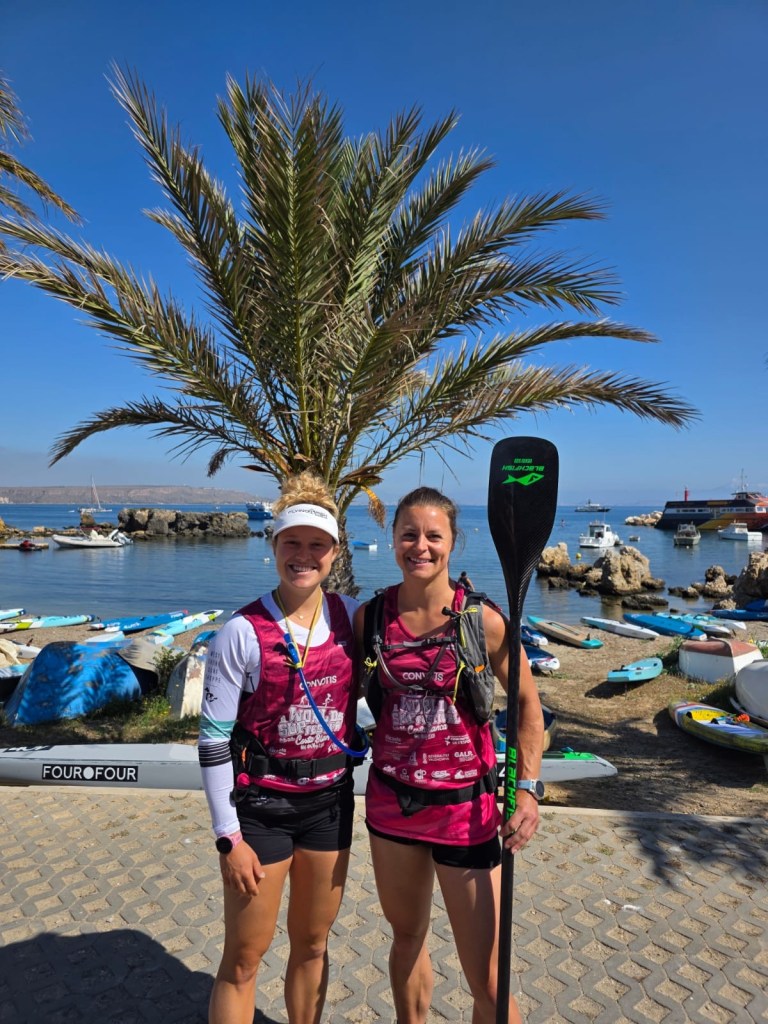
Santa Pola EuroTour, 15km ocean race May 2025
The doom and gloom didn’t last too long. I booked regular massages with the lovely Sheree from Poduim Therapies, she’s been treating me for years, and I know she’s amazing at fixing muscles! She then put me in contact with her physio, Viv at The Centre in Cardiff. Between these two wonderful ladies, they saw my injury as a project to bring my worn out body back to full strength and even better than it was. Sheree worked on releasing the tension in my neck and shoulders, which was not a one time fix, but each treatment brought more and more relief. Viv was pretty brutal to be honest, but in the best way, she analysed my posture from head to toe, and it was clear we had to go back to the drawing board. I can’t lie, tears were shed during these sessions, but I did as she said until one day she declared that I could start doing upper body work again and I was over the moon!
The recovery was slow; the discomfort and lack of ability to sit comfortably lingered. My acceptance of needing to stop and focusing on what I could do rather that what I couldn’t was the ultimate game changer. I realised that I could enjoy a rest after a busy day at work – I was even enjoying work more because I didn’t have to do any extra training!
I took the time to do things that brought me joy; reading and playing music; spending more social time with friends; taking trips; having a glass of wine or two. I took the time to journal and connect with myself in mindfulness and meditation, which ultimately lead me to questions about where I wanted to go with sport, and what balance means for me. I realised that this more holistic approach to moving my body felt grounding and refreshing.
After a couple of weekends SUP surfing – a long awaited return to paddling! I realised I have been feeling different. I feel different in my approach to exercise, I feel different in the way I look; how hold my body and how I want to move it. I feel different mentally from giving myself a break from the punishment of the ‘I should be doing more’ approach. The pain is now a memory, I am comfortable again, I’ve had a slow increase in exercise and it feels good! Most importantly I have a smile on my face! I look in the mirror and realise that my posture looks good too, and the relentless obsessing over my physio exercises has brought balance to my physique. The low moments, the uncertainly and tears have all been worth it, and now tears of joy brim in my eyes because I realise that I am still strong, still fit and in pretty good shape. I have the ability to now become even stronger physically and mentally from overcoming an injury that I believed to be devastating.
In that moment of looking in the mirror, I realise that I appreciate my mind and body so much. I have spent a lot of time apologising to my body for treating it so harshly and asking so much of it without taking the time to look after it properly. That appreciation has come from taking a step back, one that I didn’t want to take, but now I can say hand on heart that I needed it, and I’m honestly grateful for it. Things happen for a reason, I needed the time to re-focus, relax, and have fun. After a couple of proper fun summer weekends, I feel radiant again. The storm has well and truly passed and the sun is shining on the other side. I see that I may have the ability to come back to my sport faster and stronger than ever, but maybe I want to keep that strength for myself and for whatever I choose next.
I really want to thank Sheree and Viv for helping me fix my body, and giving me confidence that it will all be ok. I also want to thank my friends for just listening when I needed to rant about how much pain I was in! If you’re in a similar situation, I encourage you to reach out for help in fixing your injury, and be kind to yourself, your storm will also pass.
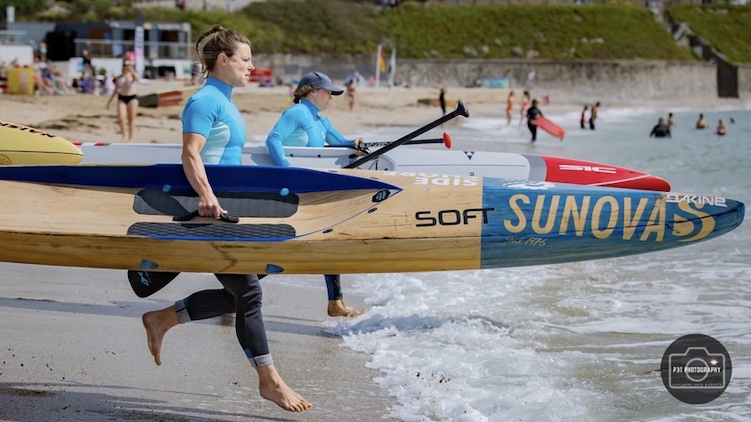
Flying into the Sprint race at Falmouth National Selections 2023
Introduction
The thought of a pre-event or pre-performance routine might not appeal to everyone; however, it can really benefit all levels of paddler in any type of event. I’m not here to convince you, but if you want a bit more out of your performance, or you’re curious to know what I’m talking about then read or listen on! Just to explain what I mean by pre-event routine, it is the way in which you organise yourself in the lead up to a race or event in the week before, day before and on the day. When I talk about pre-performance routine, I mean the way that you prepare the body and the mind for your activity, whether that is sport or a focused task. For the purposes of this piece, I will refer to Stand Up Paddleboard racing and events and my experience and findings on this topic. I will also reference a couple of books that I have found really interesting for your further reading.
Routines and habits are something to consider if you are looking for the extra gains in your sport or craft, after all it isn’t just about sport, as I mentioned above, it could be any focused task, like work, study or musical practice. You may already train or practice to your maximum time allowance in a busy schedule, you may already have your nutrition dialled in to the best of your knowledge, so where else can you find that little bit more when it comes to performance? Well, it comes in the preparation for performance, the state of the mind created before and then maintained during your focused task.
Background
I don’t have a definitive starting point on where I introduced routines to my sports, but have more developed them with time and experience and I’m still learning and experimenting now. I’m still trying to translate this to studies and work but I’m getting there with practice. Upon analysing and reflecting on my best sporting achievements both individually and as part of team, it was clear that they were the result of a good physical and mental states of mind before and during competition. I want to share more about this topic because I have really enjoyed seeing my own progress and the way I have layered each new routine and finding on top of the next. I am discovering more all the time and I am certain that my routines will develop further as I change and grow as an athlete.
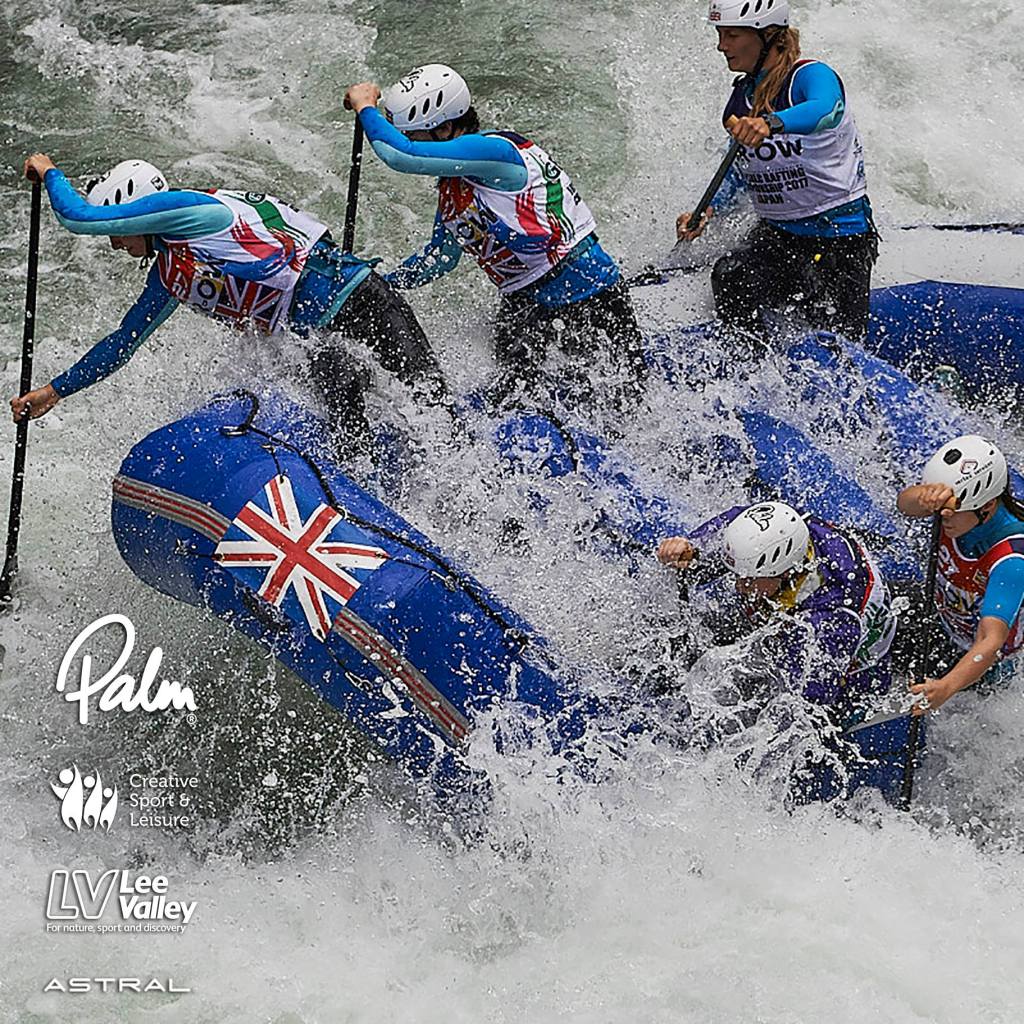
I became aware of pre-performance routines while paddling with the GB Women’s Rafting team. One of my teammates introduced us to the team warm up, this was more of a mental preparation rather than a physical one. It focused us together, got us thinking as a team and fired us up. This has a name, it is called Activity Set [quote from Coaching Science by Terry McMorris and Tudor Hale] We would start to get into the zone by taking 10 minutes for our own personal warm up, this was the physical preparation. Once we were satisfied with our physical preparation we gathered together at a pre specified time, where we gathered in a circle. In this circle we would perform a series of moves that challenged our co-ordination and teamwork, they created focus, rhythm and sharpened our minds. These are the key elements that were needed for functioning in the most productive way in a raft together. This mental preparation task focused our minds yet also contained an element of fun, many of the exercises made us chuckle as we performed them and they were became the glue that bound us together.
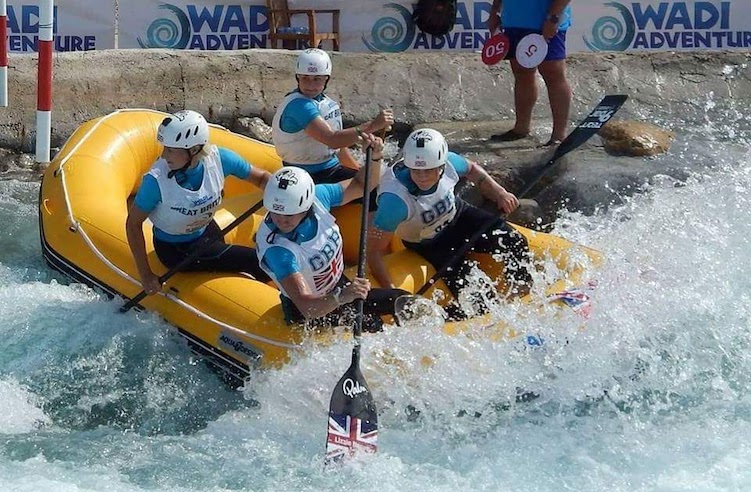
Full focus; on the way to becoming World Champions in 2016
In the last year I have developed a similar routine for Stand Up Paddleboard racing. Since then, I have found that I have maintained much better focus for the shorter races such as the technical and sprint events. I still use the same warm up and process for the longer events too, I find that no matter what the event I know I will start with maximum physical and mental readiness. Although this was a path of relative self-discovery, I also reference a couple of books here which might be of interest. They have further detail in activity readiness and the reasons for doing so. The first of these is Coaching Science by Terry McMorris and Tudor Hale, it has various chapters which go into detail about the benefits of having a pre-performance routine and the difficulties of sports like SUP where in a day you might have multiple events where athletes have to re-warm and re-focus many times. They also go into further detail about post-performance routine, an element that I will be taking more seriously this year. This year I also delved into a fantastic book called Peak Performance by Brad Stulberg and Steve Magness, they approach the topics about how successful people maintain their performance through keeping their routines consistent. They look at business people to sports people to politicians. It is a book that I would highly recommend for inspiration to create and keep consistency in your life. One fine example they give, is my favourite author Stephen King getting himself in the zone for writing. King has cup of coffee and listens to ACDC to find his rhythm, this is his version of Activity Set. If you are a paddler or more interested in the sports psychology of paddling then you might be interested in a beautiful book called In The Flow by Jonathan Males. He writes a very interesting chapter about the difference in psychology of female and male paddlers, and highlights the benefits of women paddling together.
The Benefits of Routine
Any level of paddler can benefit from introducing routines to training and competition. It can simply make life easier on the day of your event and it can help reduce anxiety. A routine can create more certainty around timings for the day and give focus to each task in hand, so if you suffer from nerves then routines are a useful tool. Finding your personal routine to become ‘Activity Set’ will prepare the body and the mind, so whether you’re a beginner or experienced paddler it will always be beneficial. The physical readiness is always important and the mental preparation is more of a refined habit, but once the benefits are realised, you will wonder why you haven’t been doing it forever!
If you’re the type that is pretty chilled on race or event day, you might benefit from some ‘revving up’ through an excitable and active pre-performance routine, however those that are anxious may find a calmer routine, followed by focus on breathing and visualisation more effective. Those that suffer from negative self-talk may find that some moments of reflection pre-race, outlining goals, will better their performance by switching the negative to positive through focused intentions. I will give more examples on how to do this later.
For young people taking part in sport, it is a good idea for parents to help them get into the routine of warming up and taking time to focus on the event. Creating a positive experience around competition will mean young people will more likely want to take part again. This positive experience however, is really driven by parents and coaches who have the power to make this happen. If a young person is visibly nervous, or distressed, then their concerns should be validated, not simply dismissed. This does not acknowledge that is it ok, and normal to find a competition environment stressful. Instead it teaches them that what they are feeling is not a normal response. You could swap ‘Oh you’ll be alright’ to ‘I understand you must be feeling quite nervous today, lets work together to help you feel more relaxed’ – then, helping them to perform a focus task like a warm up or visualisation technique to help them prepare better and give them tools they can use again for the future. Easier said than done for adults and young people alike, but starting with these elements in training begins to build good habits and makes them easier during competition. Parents and coaches can help young people to create a routine on an event day just the same as I will outline later. As a coach or parent there is also the added responsibility to be organised yourself to make the day run smoothly.
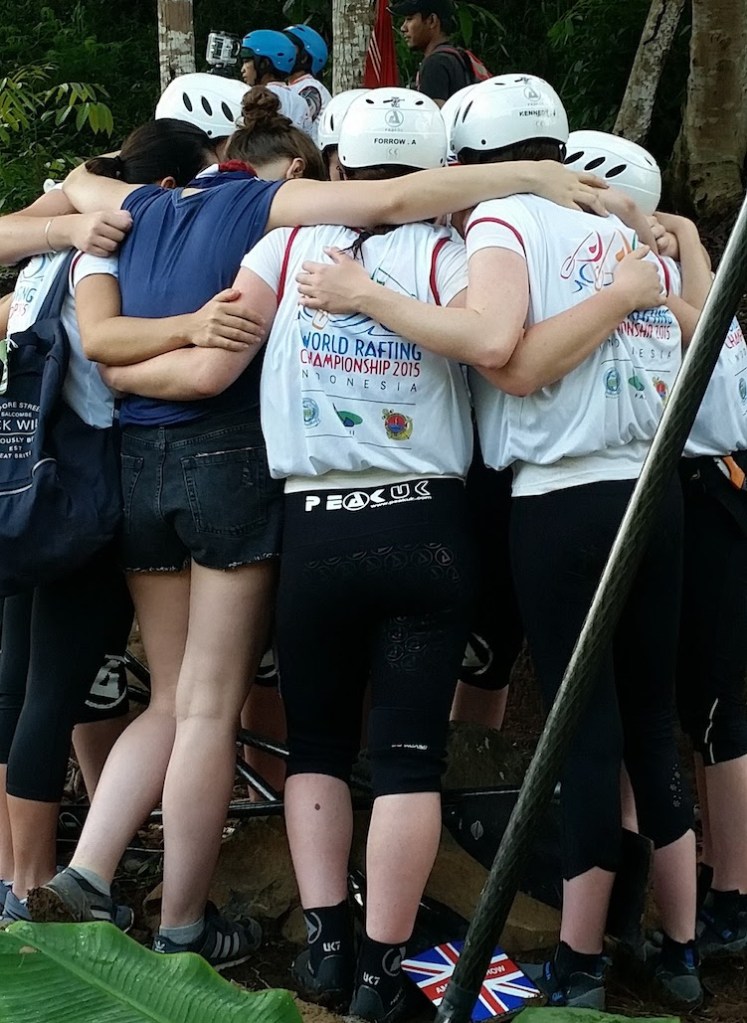
Forming strong bonds: Junior Girls Raft Team, Indonesia 2015
Pre-Event Routine
Lets break it down, we will look at the week before the event, the day before and the event day itself. In an ideal world, you will have done enough training for the event that you are going to take part in. You will have the right kit, and hopefully you will have a good idea of what you need nutritionally to keep yourself sustained during training, therefore you can apply this to your event. One motto to live by is ‘nothing new on race day’
The Week Before
The week before an event is a good time to compile the kit you need. It is also a good time to test out the kit you are going to wear during and make sure everything is working, for example, do you know how to operate your hydration pack?! You may already do all these things in training, but if you use slightly different methods during an event then it’s good to have a final test before the big day. Nutritionally you might want to do a session with an electrolyte in your water, or with any snacks you’ll be carrying with you, or even test your pre-event meal before paddling. It is wise to do a training session at the same time of day that the event will be held, so you know how your body will be feeling and fuelled at that time of day. Not all these things are possible but any pre-event simulation beforehand will be really useful.
The Day Before
The day before you will probably want to check timings for the event, or even make your way there, especially if it starts early in the morning. Arriving ahead of time gives you a chance to check out the water conditions and even get out for a paddle. You will want to make sure that you fuel and hydrate well and perhaps do some light exercise or movement to help your body feel ready. Take some time to make a plan for the following day, this takes all the guess work out of event day so all you have to do it stick to your timings! My normal plan of action is to work backwards from the event start time, to the time I want to wake up. I got this planning gem from my rafting days, we were always very organised as a team and this kind of preparation made sure that everyone knew exactly where they had to be. Other things that you might want to include are; travel time, registration time, race briefing, changing, snack or breakfast and warm up. I am going to go into further detail about the warm up later as I think this is one of the most important elements of the day. Some of these things might be second nature to you if you are a seasoned competitor already, but they are really useful things to know if it is your first time. This planning technique is also great if you are travelling with a group and helps to maintain good team communication. If you are competing in multiple events during the day, for example many sprint and technical rounds, then it is wise to create a few versions of this plan to follow through out the day, as you will need to be on the ball with fuelling yourself and warming up before every event – even if the event is only a two-minute sprint! Being organised like this is more likely to help you achieve optimum performance.
On The Day
On the day you can follow your plan you set out the day before, no doubt there will still be some nerves and you might not be feeling quite like yourself. If you are travelling with friends or family, its often worth communicating with them that you might behave a little differently because you’re nervous! Once you are at the event site, if you haven’t done so already, take some time to check out the water. Have a look at the start line and the course. If you are paddling in sprint or technical races, you can start to make some tactical preparations, this is one of the most exciting elements of SUP racing! Tactics can really help your race run smoothly. For example if you have chance to get on the water before a technical race, then have a practice of paddling in different angles to the wind and swell, making turns in every direction will help you feel familiar with the conditions. You can also think tactically about the start line, where can you stand to give yourself a better advantage. Even analyse the wind, how will this affect your paddling stance or position on the line? For the rest of the day, try and keep to your plan, the plan gives focus, yet it doesn’t have to spoil your fun. There’s still many moments for laughing and having a good time with your mates, in fact having a laugh and a joke is the perfect way to help relieve some pre-race tension.
The Practical Application and Pre-Performance Routine
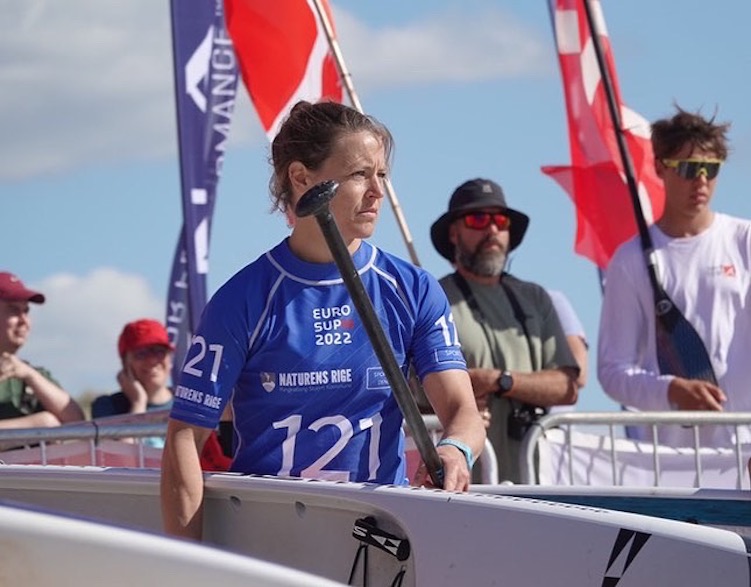
Here I’d like to outline my thought processes and preparation for the stand up paddleboard European Championships in Denmark last year. In the lead up to this event I really became aware of how much a good routine and pre-performance process can be beneficial. I also realised my enjoyment for learning about this topic and experimenting with new strategies. It also just happens to be the process that lead to one of my best paddling performances to date, winning an individual bronze medal in the sprint event. However, I was also incredibly happy with my performances through the intentions I set and executed that were not outcome based. If you set outcome based intentions then you are looking at placing and standings amongst other competitors, however if you are looking at performance based intentions then you are looking for more personal feelings and small gains, for example executing positive self-talk during the race or maintaining good technique. Even when I have been fortunate enough to win or place on the podium, I still have been fulfilling intentions that are performance based rather than outcome based. Doing so means that there is always more to paddling and the feeling it gives rather than the feeling that success gives.
On the lead up to Denmark I didn’t always get the chance to train how I wanted. Sometimes I was only training up to 30 minutes a day due to work. I was doing what I could and that included eating well and structuring my training to include everything I needed, even if trainings were shorter than I wanted. I was also working on staying grateful and grounded in my day to day life. I took this thought process to Denmark with me and it allowed me to fully immerse myself in the moment and be entirely proud and present.
I had started to include warm up routines into my training schedule at home and started to experiment with the feeling and mindset that I wanted to create during racing. I thought long and hard about what it was that I needed to get me to that focused point. I ended up calling upon previous experiences in meditation and mindfulness to create complete presence around the activity I was about to undertake. This meant that I started training fully focused, leaving behind anything else on my mind so I could focus on the physical task in hand. Part of this routine was also thinking about the feeling I wanted to accomplish during training. Then all I had to do was go and carry out the training and create that feeling. This is definitely easier said than done, especially if time is of the essence or there is a lot going on in your life. But I believe if you can take the time to practice gratitude and mindfulness around paddling at any level and any discipline, you will always be happy with your time on the water. These moments leading up to and including my time in Denmark have shaped the way in which I see how performance can be optimised.
The Physical Warm-Up
During a physical warm-up I either listen to some music, or I just listen to the sounds of the beach around me. I start by taking a short jog to raise my heart rate, often somewhere quiet, just out the way of the event so I can have some time to myself. After the heart raiser, I start perform some dynamic movements that warm the whole body. I do some lunges, twists, jumps, any full body movement. Dynamic movements are important because they prepare the body for exercise much better by replicating the movement that will be performed in the main session. Static stretching is much better for after exercise to relieve the tension in the muscles and help them retain their flexibility. During the warm up I move my entire body, this is because stand up paddle boarding is a full body sport, we engage every muscle from our toes right up to our neck and shoulders. To create your own warm up, you might want to work methodically from the feet upwards, or from the neck down. Once this session of movement and dynamic stretching is complete, I like to perform a final heart raiser, this is one that really gets you out of breath! If you can do this then you will most likely feel much more comfortable when the event sets off, it won’t be a shock to the body to suddenly be working at your top end heart rate. To do this you can get on the water and perform a couple of sprint starts, or paddle with some changes of pace until you are out of breath. If you do not have access to the water or would like to do this before you get on the water, a couple running sprints or rapid movements, like jumps, star jumps, or jogging on the spot will do the trick. If you don’t like the idea of doing this on your own then finding a warm up partner could be a fun idea! Now your body is physically ready, we can have a look in more detail in preparing the mind.
Focusing the Mind
Once the body is warmed, and the heart rate is settling ready for the start, you can start to have a think about the way in which you want to tackle the event and any key elements that you particularly want to focus on. As part of this routine, I also like to take a few moments of gratitude for being able to attend the event.
The key things that are important in this section are.
Setting intentions
Visualisation
A moment of gratitude
Intentions
Setting intentions are a great way of creating focus that is not outcome based. This can be super helpful to take the pressure off if you’re feeling particularly nervous. For example, you can set the intention to speak to yourself positively for the entire race. This might be quite a challenge for you, however I can guarantee that even if you didn’t get the time or place that you wanted, but you managed to tackle every tough moment with some positive self-talk, then you will be happy with your performance. An example of other intentions might be to just keep good technique in your turns, or into the wind. This leads us into the next section, how do we remember to do this?
Introducing the Nepalese Rafting Team to the team warm up in 2017
Visualisation
When you are setting your intentions then you might want to picture yourself doing them too. You can sit quietly with yourself and think about the event course, or look out across the water and imagine yourself paddling and recalling your intentions. This also works well if you can just take a moment to take a few deep breaths, quiet your mind, listen to the sounds around you and think about yourself paddling your event from start to finish. Here you can visualise yourself accomplishing the paddle in its most positive form, the way you wish to achieve it. If you can do this when your body is relaxed, you are more likely to recall your visions and intentions when you need them during the race.
Gratitude
This might sound like a funny thing to be calling upon during a race or event. However, I think gratitude can help to create a grounded feeling and reduce anxiety. After you have set your intentions and visualised how you are going to perform them, then take a moment to hear the sounds around you in more detail. During this moment of mindfulness you might hear the waves washing on the shore, you might hear the laughter of competitors around you, or you might hear the sounds of nature if you’re sitting somewhere quiet. Have a think about how you came to be at the event, can you remember your first time on a SUP, what did that feel like? What has your journey been like from beginner to having the skills to take part today? Who are you grateful to on your SUP journey, have friends or family supported you along the way? Perhaps you want to think about the magical feeling that being on the water gives you. Try and keep your thoughts only positive and grateful, thinking in this way calms the nervous system and creates focus. Once you are happy, calm, then take yourself back to the race and make any final preparations. Keep mulling over the thoughts that you have had in the last 10 minutes or so, especially your intentions for the event.
The Start Line
On the start line, just keep thinking about your intentions and the first movements that you are going to take. For example, if you are doing a beach start, you can play a mental video of you performing the perfect start a few times over. Listen to the sounds around you and quiet the mind. Already start to live in the moment that you created from your visualisation earlier. Once the starter signal goes its time to carry it all out, all you have to do is go through your actions. It is easier said than done to start with, but I can guarantee you that once you start operating like this, you will love the feeling and focus that you get from being so present. For over a year now I haven’t suffered with that soul destroying negative self-talk. Even when my races haven’t gone to plan and I have performed much slower than expected, I have called upon my intentions and the reasons why I am grateful to be at the event which have kept me grounded.
Focusing on the immediate task; on the start line
Hopefully now you have a good idea how you can construct your own pre-event routine and optimise your paddling through a solid and detailed pre-performance routine. Remember that you can create something that works for you, built around your experiences and what your mind and body needs, the important bit is that you keep consistency and re-evaluate as you go.
Creating a focused routine like this fantastic to optimise performance for any event, however it does take time and thought and can be super tiring on a long day such as a sprint and technical day, or even over an entire event season. If you have managed to complete a whole day or season of super focus, then remember to congratulate yourself, it is hard work. Remember to take some downtime from the focus in the off season, or through leisure paddles so you can keep coming back to perform stronger again and again.
Thank you so much for listening or reading, congratulations if you have got this far! I would love some feedback on this topic, did you enjoy it? If you would like more information then please get in touch!
We all know that physical fitness is incredibly important when it comes to sporting performance, but how many of us think about our mental fitness, having good mental strength during training and racing has huge potential to improve performance. Building the self-awareness needed to analyse your current focus level will serve as a valuable tool to review training, racing and to learn from each experience. You will also reap rewards in day-to-day life too, finding the same tools cross over well into the work place or personal life.
When I talk about self-awareness and the positives of it, I am talking about the feeling of noticing the mind and the body, becoming more aware of how we feel before, during or after training and racing. It is also the feeling as we approach training; is it a case of rushing quickly after work, jumping on the river to smash out an interval session, not giving it a second thought OR is it taking the time to set an intention of how you want it to feel, noticing your surroundings, being grateful that you’re fit and able to train? It doesn’t take any longer! I will go over these details more later and how you can put them into practice. The benefits of taking the time to add these details are that you will become more present, be able to cultivate some empathy for yourself and be more in tune with your body. This helps to build positive self-talk which builds confidence and therefore confidence in your paddling too. Being more aware of your mind and body just might help you to avoid injury if you are listening a bit closer too. Just like our physical fitness there are no quick fixes, mental conditioning takes practice. It is possible to notice changes even within a short period of time as long as regular habits are built, but soon the magic will start to happen and the self-belief will start to grow.
The reason I would like to bring up this topic is because I recently realised that I had been neglecting my own mental strength, especially when the going got a bit tough in competition. I thought I was strong, but I had let some of the mental gym sessions slip by and I paid the price when I needed it the most. I would like to add that if you are struggling with a serious mental health condition, then it is essential to seek some professional advice on how you can start a journey to feeling better. There are so many wonderful therapies and practitioners who can guide you in the right direction. Please don’t be afraid to speak up if this is something you need, the right support is available. These tips aimed at creating extra habits to boost sporting performance.
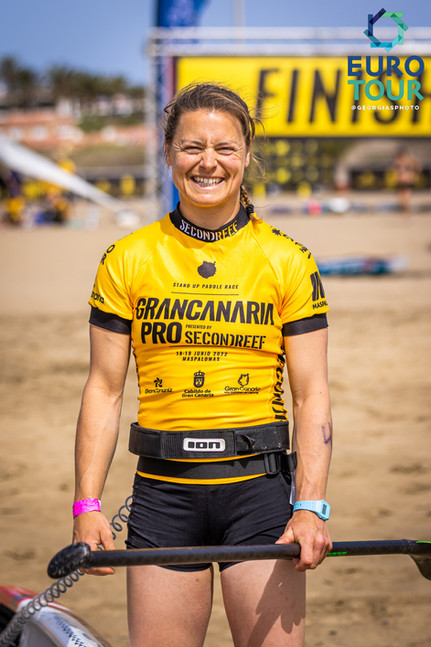
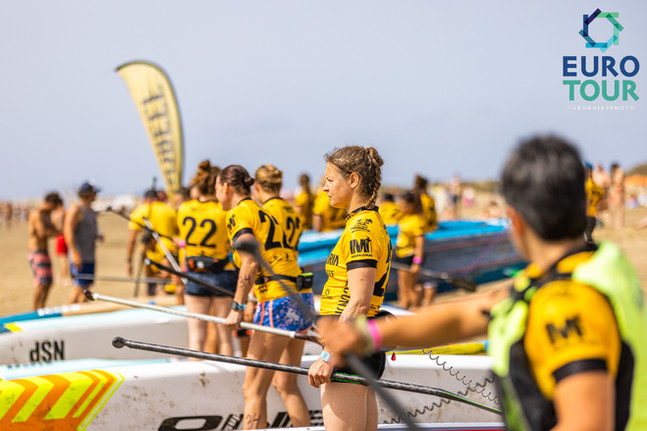
The exact event that started this realisation came about as follows; on reflection it was the best sporting trip that could have happened for me this year – they say we always take the correct path. I headed to the Gran Canaria leg of the Euro Tour where I knew I would be out of my comfort zone, it was going to be something completely new to me, racing against women of a very high caliber. I rocked up to the event in what I thought was a good headspace, plenty of excitement for racing and a new experience. What I had failed to plan for was how I wanted to feel and how I was going to tackle this challenge, I was in some ways winging it and seeing what would happen.
I got on the water the day before the race and my confidence was immediately shattered by feeling unstable in choppy water. Anxiety and negative self-talk took hold, I just wanted to go home. That evening I had a good think about my intentions for coming to the race and what I wanted to achieve from it. It took a while but eventually I came around to feeling strong and able to start in the event the following morning. I knew that I was there for the experience of racing internationally for the first time, not to try and win, although sometimes it’s hard not to have expectations of performance. As a side note, after this event I also learned to set goals and outcomes that were not performance based yet measured on feeling.
The morning of the race I followed my normal pre-race routine and got my head into gear. (I will talk about pre-race routine in another piece) That morning water just happened to be so much calmer and forgiving. The air was warm and the water was gently swelly, crystal clear and incredibly inviting. I spent about 45 minutes enjoying catching the friendly waves, practicing turns and soaking up the present moment. This was all part of the experience I had travelled for – not just the racing. Intention 1 ticked off!
Feeling back to my normal self, I returned to the beach, ready to start the race with some fire! A little while later as I stood on the start line, I analysed the route I was going to take on the water, seeing myself perform a fast beach start and paddle confidently to the first buoy. This happened almost down to a T, however at the first buoy I hesitated as I started the turn, someone bumped my board from behind and I fell, hitting my head on the front of my board, literally knocking the confidence out of me and the negative self-talk back in. I jumped back on my board and tried to get into a rhythm again. If anyone one has ever experienced a confidence knock and negative self-talk firsthand, you will know that it feels like something sucking the energy and all the fight out of you. Holding composure was the only option, in this case I felt like I was desperately trying to maintain dignity and look as strong as possible to the end.
Although I gave the best performance I could in both races I couldn’t help but feel hindered by my mental performance more than my physical performance, knowing I could and should have put more mind prep into this race. It took a day of consolidation; some relaxing in the sun and a fun paddle before heading home to get my head around what had happened. I felt I needed to ask myself how I was going to move forward and how I was going to repair my confidence ready for the next event!
In analysis of myself post event I realised that I needed to boost my confidence as a sports woman and SUP paddler. I went back through some of the techniques I have used in the past for general self-confidence, relaxation and sporting performance. I made a plan to put them into use in my day-to-day life and in my training. It wasn’t always easy but change doesn’t happen over night. Here are the main topics I put into practice.
Meditating on focus
Writing a list of positive paddling focused affirmations
Using visualisation techniques both in training and competition.
Setting outcomes that are not performance based.
Gratitude
I have chosen to go into more detail in the coming pieces about the topics above. I have found all of them extremely useful and use them regularly. I firmly believe in them and now having put them into practice as habit, I would highly recommend giving them a go.
I look forward to sharing these in more detail, including how I used them to have a fantastic experience at Euro SUP 2022 in Denmark this year. Stay tuned.
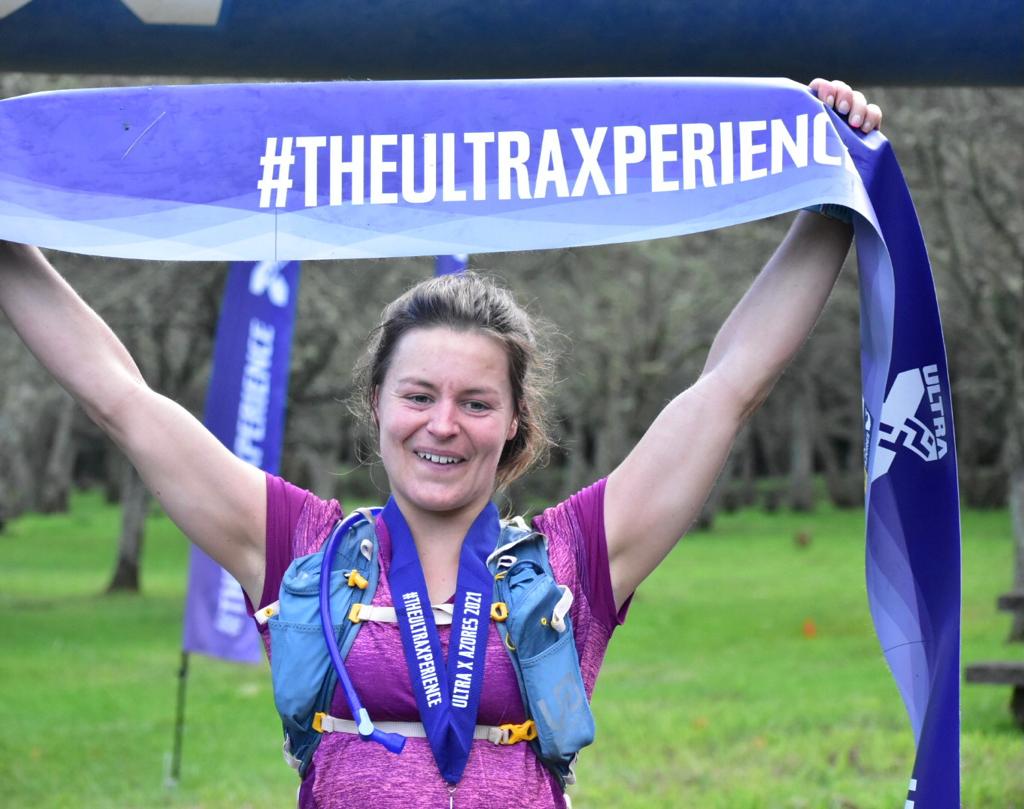
On Sunday 28th November I took part in the Ultra X 50km trail run event. This was the shortest of the two events, the longer being a two stage 125km route. To be honest I signed up to the event a little late and even though I had friends doing the 125km event, I didn’t have time to train for that, which if you’re considering any of the Ultra X events, I would seriously consider your training time.
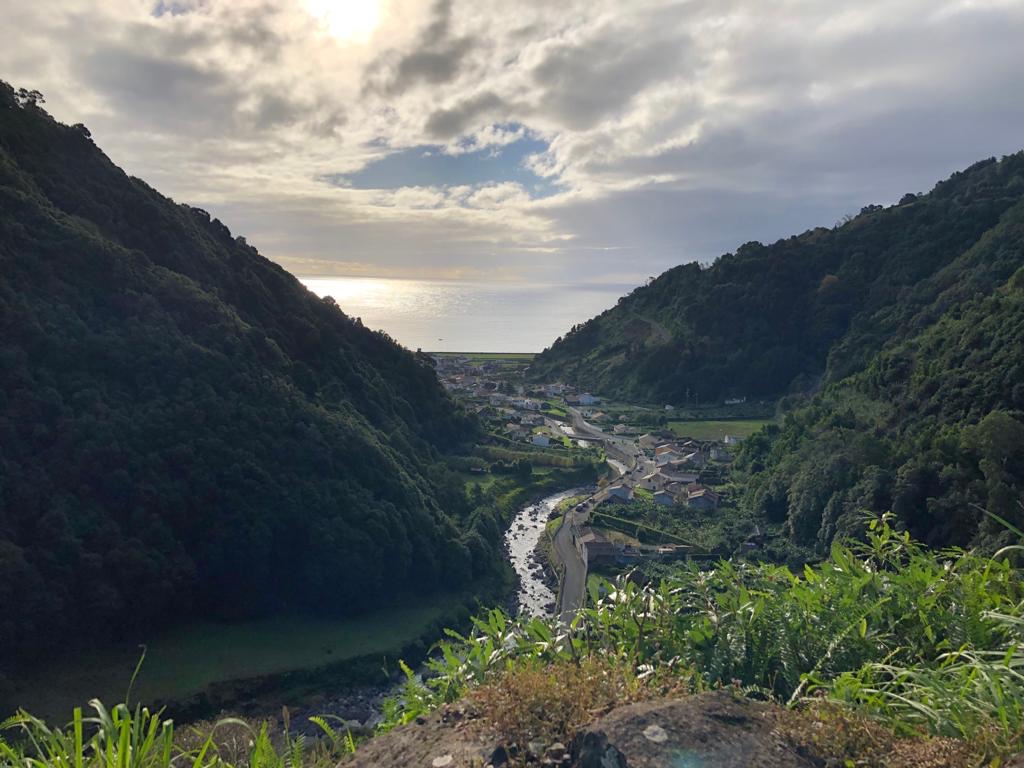
I didn’t even know where the Azores was before I booked the event, so I was pleasantly surprised by the lush temperate climate of the Atlantic Archipelago. There is so much to see on the Island, it felt a shame that a lot of the competitors were flying in just for the event and out again before they had a chance to explore, but for those short on time around work, the run routes sure gave you a full 360 view of the island through the 5000m+ climbing (2000m+ for the 50km event) so you wouldn’t feel disappointed with a long weekend away.
For the 125km event, the route took you from Sao Miguels’ main city, Ponta Delgada, along the coast a short way, before climbing through the hills, fields, a lot more hills (according to my friends) and then finally descending down to Faial Da Terra, where there was a camping spot arranged a stones throw away from the sea and where the start line stood for the next day. After speaking to a few of the 125km participants they seemed pretty worn out yet not deterred by a very full day covering 75km and 3000m+ of climbing. There were plenty of abilities taking part in both distances and the Ultra X crew had unfailing enthusiasm for keeping everyone motivated throughout the two days, helping wherever they could, especially making sure that the final people finishing in the early hours of day one were as safe and happy as possible after 17h of being on their feet!
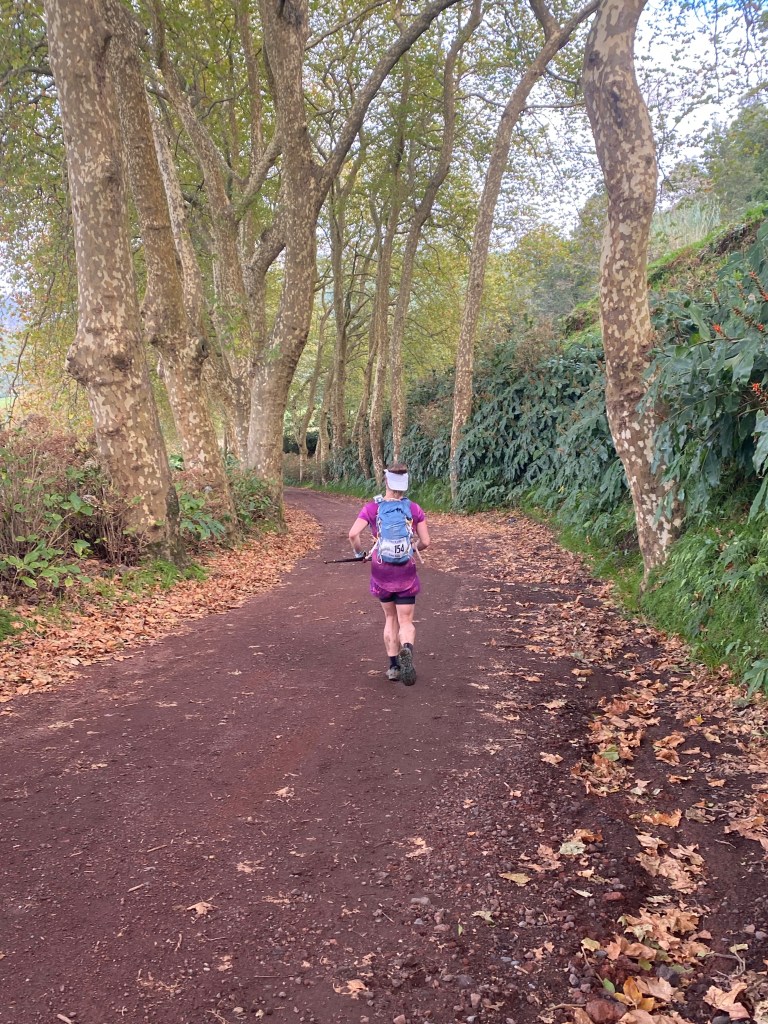
At the start of day two the 125km participants went an hour ahead of the 50km. There was well organised transport arranged for those coming in from the main city for the shorter event to the start line, which was about 80 minutes away and a stunning journey in itself. I really didn’t know what to expect not having ever done a route so hilly before and I was getting a little nervous. However once I set off everything went like a whirlwind. At 1.5k the first accent began and I was immediately grateful for having walking poles with me. I had already heard that our fast running friends from the 125k had taken 55 minutes to cover the first 5k, so that pretty much set the tone for the day! I plodded up the hills using my poles at a pace that I wouldn’t normally be proud of, but to be honest I think this wise pacing saved the day. The severity of the incline never really let up and I mostly opted for power walking Nordic style with poles for most of the uphill, and jogging on the flat and the down hill. However the downhill was pretty sever too and took a lot of concentration to cross land slips, streams and boggy ground. It was really a wonderfully epic event. The event was well marked, although sometimes you had to look a little harder to find a flag, but all the major turns were unmissable. I took one wrong turn, but that really was my fault for reading the arrows the wrong way around! I guess thats what happens when you get a bit tired!
There were check points roughly every 10km with plenty of water available, massage, physio and medical treatment on hand too, most importantly many friendly faces to keep motivation high. I really tried to enjoy every moment along with all the spectacular scenery, as it can be all too easy to be focused on time and pace. The route passed through the town of Furnas which is a great tourist attraction, there is a lot of geothermal activity there and the town can be seen for miles by the billowing steam rising from the ground. Although my personal highlight was running down a double row of Plane trees which stretched for about 1.5km. They are found all over the island, but this was really quite enchanted. There are also some fantastic wild plants that are mostly found in the UK as ornamental garden plants, so if you are green fingered there is plenty to marvel at.
Nearing the end of the race and descending, I can’t deny that my legs were really feeling it! I met and chatted to many wonderful people along the way, but I was most pleased to bump into my good friend and sports buddy Fieke, as she completed the last 2km of her 125km journey. She started an hour ahead of me but it took me about 6.5h to catch up with her. We ran in together accompanied with two of our friends and supporters where we crossed the line together. It felt like a long time coming of being able to do an international event, travelling somewhere new and spending time with some friends in the way that we knew best- by doing an epic sporting event.
Medals and beers were well received, many hugs were shared and laughter had at recounting stories of the gnarly parts of the trail. Thank you Ultra X crew for a great event!
I was hoping that my next piece was going to be about my training diary that I have been keeping for a couple of months now, but I am finding that I am adding to it all the time, and the diary itself is developing into more than just a training log, so I want to be able to a really good write up on that soon. Instead I thought I would give you a little insight into my short journey learning Welsh.
Starting to enjoy language
Language has always fascinated me really, no doubt sparked through learning at school. I’m always keen to learn a few key phrases in a new country and I always enjoy looking for the connection and similarities between different languages.
Although I didn’t complete my degree in German and Dutch, I didn’t lose the love for learning, it was just that completing a degree wasn’t for me at that time in my life. I have over the years picked up a small amount of Nepali from spending four months there immersed in Nepalese culture and I still remember much of it now. That combined with a bit of German, broken Spanish, vague knowledge of Dutch (how did I write those essays) a tad of Romanian, (from making friends while working on a building site – ok I know the word for hammer!) I can probably make it sound like I know a bit (I don’t!) but it’s really all just good fun and the kind of fun that keeps my brain entertained. Especially doing things like trying to make sentences in Nepali and fill in the gaps with the words I don’t know in German!
I was by no means top of the class in school and university, so don’t get me wrong, I’m not saying that I am a gifted language learner who can turn their hand to any language. I just enjoy dipping my toe in different pools because its refreshing and doing things you enjoy is good for the mind. In fact I think if I tried to become fluent in every language where I had dipped my toe, I would have drowned in the sea of work that comes with learning to speak another language – it is hard work and requires constant attention. Wouldn’t it be nice if we could be programmed like the fictional Jason Bourne and without even knowing it be able to converse in any language at the drop of a hat?
Beginning the Cymraeg journey
I have lived in Wales for nearly 3 years now and apart from the odd word here and there, and the odd road sign, I didn’t know how to say much in Welsh, yet I knew the Welsh language was alive and kicking because I had heard many people chatting away together, I’ve also attended a party which was entirely in Welsh. Luckily I had a friend there to translate the speeches. There are also Welsh language TV and radio shows and all leaflets and signs must be printed in English and Welsh. I don’t know much about the history of the Welsh language but I think it’s great to keep the language going. Part of its appeal to me was that it is an unusual language and widely known for its lack of vowels and difficult pronunciations – sounds like a great challenge!
This is how the app looks on my iPhone. Such a great tool for language learning!
I started by using the SaySomethingIn app, of course this one was SaySomethingIn Welsh, but I think they also do other languages too. The process is full on from the start and by the end of the first 30 minute lesson you are able to use a group of words to say slightly varing sentences, the concept is genius. I think the rate of progression is directly linked to how much you want to learn and area able to achieve. In my case I found that I was enjoying learning so much after lesson one, I was soon able to move on to lesson two and so things continued. However I feel that even when things got tough, it has still been easy to carry on because like the tutors explain, treat it as a word game rather than learning a language and don’t be hard on yourself for making mistakes. Also for this reason it a great tool even if you are not a natural language learner, the process might surprise you!
The concept is that they throw words and phrases at you and you repeat them back, eventually combining all the words and phrases you already know, adding and taking away parts here and there until you are left with quite the range of vocabulary. You have listening tasks too and there is a vocabulary list to refer to, so it appeals to pretty much all learning styles. In the end words you thought were hard in the previous lesson soon become second nature and so you progress.
Since you don’t need to sit and slave over a book and paper you can learn on the move and its actively encouraged to learn while you are doing other things. My personal favourites are learning while I’m washing up or folding clothes. It’s surprising how much you can take in while doing something else.
Eureka moments vs scary moments!
Little mile stones for me are recognising words while I’m out and about. Living in Wales and learning Welsh is great, there are opportunities to test your language skills everywhere. I have found listening to BBC Radio Cymru a great help too, although I don’t really understand much at this stage, it is still wonderful to hear words and phrases I recognise. I call this game Word Bingo, simply listen and pick out the words I do understand then try and grasp the general topic.
Learning Welsh in my own bubble is great; I can make up short sentences and speak to myself fairly well. I can also recall just about everything I have learned… However… when faced with speaking with a Welsh speaker for the first time it was like I hadn’t learned a thing. I recently had the chance to speak with my good friend Gareth from Cardiffs GetOnTheWater . Although he was incredibly patient and spoke clearly, my brain went to mush through fear of being able to produce a single coherent sentence back that I could only remember the simplest of things. I guess I am at the learning stage of being consciously incompetent (which I’m sure works for language as well as sports coaching) There is so much I want to say yet it must be that fear of failure takes over. I am interested to see how this journey progresses and takes me on a learning adventure, hopefully to being unconsciously competent in Welsh, for the basics anyway.
Where will it take me?
I’m not sure really what I would like to with being able to speak Welsh, but I guess it may open up job opportunities in Wales when I finally decide that I don’t want to make a living from swinging around on a rope. Most of all it might complete a life goal of being able to speak a language fairly fluently, and hopefully I will be able to put it to good use. However I won’t count my chickens yet, just in case, and I will report back in a few more months with more exciting news after I have fried my brain with lots of new words and phrases!
I have recently been thinking about the way in which we use sports apps, technology and social media to motivate us to get out the door, (or stay indoors) to do our training sessions. I’ve also been wondering how technology might influence others who are new to exercise.
Strava is certainly a good tool to create some healthy competition among friends and with people all over the world, but when does that friendly competition turn into more? How many people have just gone out to chase those Kings and Queens of the mountain? (QOM’s/ KOM’s – the fastest person over a ‘segment’ for example a street, a hill, or even a mountain) I’m not saying that’s a bad thing but I heard some people have even gone as far as doping to get those ‘Crowns’. To be honest, that sounds a little unnecessary to me, aren’t the QOM’s and KOM’s there for some virtual fun and motivation? However apps like Strava, Run Keeper, Track my Run, are very positive. Not only can people gather motivation from seeing their friends out exercising, they offer their own challenges, giving people some accountability for their exercise. They are also a great way of monitoring improvement and finding new routes. The best part is that it is so easy, most people have smart phones with easy access to these apps and most smart watches now link with our phones offering instant access to data and stats.
‘I forgot my watch, does today’s session even count’
It’s often the running joke throughout the sporting community (excuse the unintentional pun) ‘I forgot my watch, does today’s session even count’ or how many memes have I seen that depict a cyclist fallen from their bike with the title ‘Stop my Garmin’. Some of us are really addicted to the stats and data! When you are working towards a specific goal, forgetting your watch for a training session really can feel like the end of the world. However does it really matter? You still go out and get the job done. When training alone it’s not that easy if your watch or training device plays up, you could be losing precious time taken to train around child care or work breaks, which ultimately can be frustrating and annoying – the opposite of how doing exercise should make us feel. Don’t we do sport and exercise because we love it?
I knew I had to stop using a sports watch during racing when I was competing in triathlon. I found that if I was off the pace and wanted so badly to do well yet couldn’t keep up, I would work myself into a frenzy in my head that ultimately lead me to becoming tense, getting a stitch and performing badly. I then tried in future races to control and rationalise my thinking while I was racing. I raced without a watch and use a lot more ‘feel’. This worked much better for me. I had some great races using this method. I still trained using my watch but just removed it for racing. So that was my negative from wearing my smart watch, but I definitely still love to see my data on Strava. These days I’m also able to look at the numbers on my watch, run in a group, and even if I’m not performing at my best, I can keep myself relaxed and continue training. On the flip side to that I enjoy training with just a stop watch. I also like using this watch when I’m not particularly fit – no one can see on Strava how slow I’m going! Does anyone else do this? Perhaps this is another negative of the likes of Strava, we only want people to see when we are ‘smashing it’ rather than when we are getting back to fitness or we’re ‘off the pace’ because were doing some long slow distance training, or cake stop bike rides!
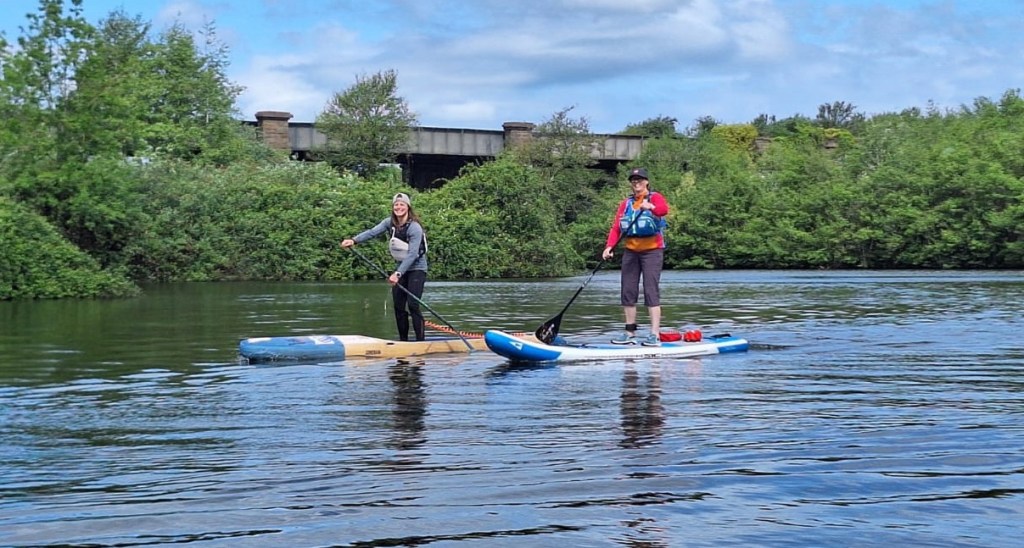
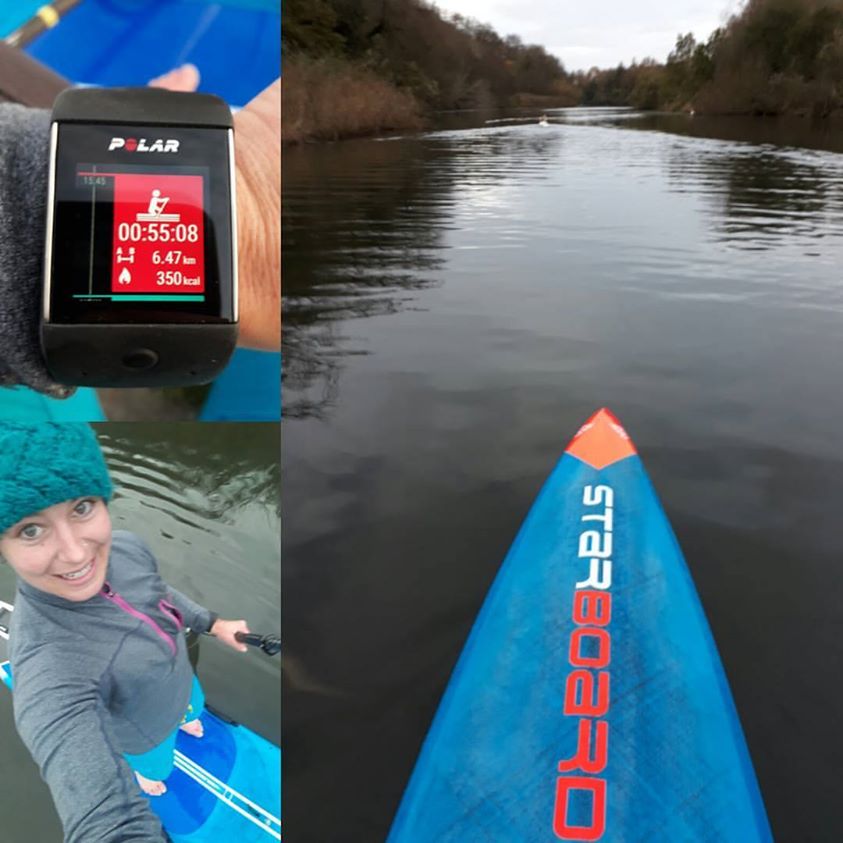
I probably took this photo with the intention of posting to Instagram… The session most likely also went on Strava – Still, a great paddle on the River Ely!
So how much influence does Instagram or Facebook have on our exercise? Perhaps the motivation to go for that run is to post a stunning photo or ‘story’ or upload a well edited video from that latest adventure sports trip? I’m certainly guilty of this, I love an Instagram story. Surely this could be a positive effect of social media, it’s giving people an excuse to do exercise, right? I believe anything that motivates people to do exercise is great, but how do we recognise the signs that we may just be posting on social media just for the ‘likes’. Someone once told me that we only post to receive ‘likes’ to feel good about ourselves, it’s called the social validation feedback loop. You post, people like, you therefore feel good, you post again, and the cycle continues. After much consideration I don’t actually see the problem with this from a sporting point of view, I think if people who are new to exercise share their new ventures and gain some confidence from posting about them, then that’s great. They have new accountability from people following their progress and they are gaining self-confidence. You also never know who you might inspire through your posts, especially if they are motivational rather that negative or ‘posey’ or over the top. I think the social media posts from professional athletes can do a lot to inspire people to be their very best athletic selves. They often offer training and nutritional advice too. Athletes at the top of their game are very admirable and of course they are also very knowledgeable. The negative effect of social media is the fairly constant stream of scantily clad ‘athletes’ ‘body builders’ in posed photos, who undoubtedly work hard for their figures, but such figures are often unmaintainable long term or they are the product of a great photo shoot rather than what they look like with relaxed muscle. We often see these as the norm on the likes of Instagram and we think that’s how we should look while exercising or in our sportswear. The reality is that we’re just sweaty, red faced, no makeup trying to get a quick work out in before cooking dinner, probably forgot to shave our legs again, but wearing shorts anyway – perhaps that just me, BUT, feeling good and positive from working towards our personal goals. Surely that’s what matters. I’m lucky to have a lot of sporty and outdoorsy friends. I personally love seeing what they are up to on social media and Strava, I’m inspired by their sporting adventures, they motivate me to continue my own training and adventures.
So that’s a couple of pros and cons in my experience and opinion about sports watches, devices apps and media. Overall I think what ever gets us out the door at the moment to do some sport and exercise is great, whether you track your work outs, do them alone, post photos or keep your secret work spots to yourself it’s all fantastic. I think whatever motivates people to get out the door is great, I am always in favour of people doing sport and exercise, so I encourage anything that helps!







 Live Life Adventuring